Tests on samples of E.coli bacteria from poultry, farm workers and the surrounding community revealed high levels of resistance to the commonly used antibiotic, cotrimoxazole.
The findings reinforce the importance of a One Health approach
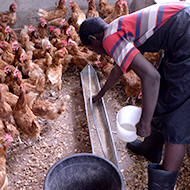
Researchers at The Roslin Institute have identified a link between high antibiotic resistance and poultry farming in Malawi.
The discovery, described in PLOS Public Global Health, highlights the need for targeted stewardship and a One Health response.
In the study, Roslin Institute researchers joined forces with fellows from the Fleming Fund - an initiative that aims to improve antimicrobial surveillance, raise public awareness and promote responsible antibiotic use in low-and middle-income countries.
Tests on samples of E.coli bacteria from poultry, farm workers and the surrounding community revealed high levels of resistance to the commonly used antibiotic, cotrimoxazole. This resistance was across animals, humans and the environment, suggesting that resistance is circulating between them.
Conversely, resistance to ceftriaxone - a drug used in hospitals - remained relatively low, highlighting the importance of protecting the drug’s effectiveness.
The study also found that the use of commercial feed, keeping chickens in enclosed spaces and prior antibiotic use were linked to higher levels of antimicrobial resistance. Some farmers were administering antibiotics intended for humans to poultry.
The findings were presented to the Monitoring, Evaluation, Research and Surveillance Technical Working Group of Malawi’s Ministry of Health and Sanitation. Researchers will now work with the country’s Antimicrobial Resistance National Coordinating Centre to translate the findings into practical steps.
“These findings reinforce the importance of a One Health approach to tackling antibiotic resistance,” commented Dr Stella Mazeri, of the Roslin Institute, and former Fleming Fund Deputy-Director.
“It was a privilege to support the Phase 1 Malawi Fellows in their collaborative project, contributing to evidence that can help guide more effective and context-specific interventions.”
Image (C) Akindele Aremu-cole/Shutterstock








 Defra has published guidance for the vet sector ahead of a proposed UK-EU Sanitary and Phytosanitary agreement.