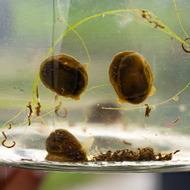
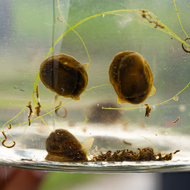
The grant will fund a project to save the glutinous snail.
The money will benefit two ambitious conservation projects.
Chester Zoo has been awarded funding as part of the largest ever UK government investment in species recovery.
Specifically, the grant will fund two ambitious conservation projects to help bring some of England’s most threatened wildlife back from the brink — including a snail found only at one lake in Wales.
It forms part of Natural England's £60 million Species Recovery Programme, which is funding 130 projects across the country to protect 364 threatened species.
Luci Rampling, trusts & foundations manager at Chester Zoo, said: “This funding will have a huge impact in helping conservation organisations like Chester Zoo safeguard these incredible species for generations to come.”
Working alongside Wildwood Trust, Chester Zoo will establish conservation breeding programmes for native invertebrates, which are historically overlooked in conservation.
The Recovery Hub will focus on glutinous snails (Myxas glutinosa), which are found only at Bala Lake in Gwynedd, Wales. The snails will be bred as part of a collaborative British and Irish Association of Zoos and Aquariums project and two other highly threatened species.
The funds will also help drive forward Chester Zoo’s work to save the lady's slipper orchid (Cypripedium calceolus), one of the UK's most critically endangered floral species.
Once widespread through the UK, this delicate and colourful plant once had a wide range, particularly in the limestone districts of Derbyshire, Yorkshire, County Durham and Cumbria. However, habitat change, including the loss of UK woodlands, and over-collection by orchid enthusiasts in the 1800s and 1900s devastated the species.
Phil Esseen, head of plants at Chester Zoo, said: “Our partnership has prevented the extinction of the orchid, and we’re on the brink of achieving self-sustaining populations in the wild.
“Thanks to this support, we will be able to intensify the work we’re doing to research the species’ habitat preferences, how it interacts with soil microbiomes, how best to germinate seeds and in building community support for the protection of these beautiful orchids.”
Image (C) Chester Zoo.





 BVA has announced a new series of its Building Great Workplaces lunchtime webinars.