Welcome to vnonline.co.uk

vnonline.co.uk provides the veterinary nursing profession with the latest news and industry developments, as well as events, resources, learning materials and careers.

Our website is dedicated to veterinary nurses and we strive to provide a platform where you can voice and explore your interests.

Not a member yet? Sign up for free!

Register for free with vnonline.co.uk to gain unlimited access to news, resources, jobs and much more!




Click here to become a member


Log in to vnonline

Forgot your password?

Posted: 11th May 2026

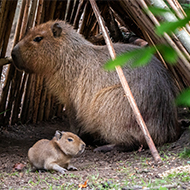
Edinburgh Zoo welcomes first capybara birth in 18 years
The newborn capybara was born to first-time parents Luna and Rodney.
The newborn is yet to be gendered or named.

The Royal Zoological Society of Scotland (RZSS) has welcomed Scotland’s first capybara birth in 18 years.

The pup was born to first-time parents Luna and Rodney, with its first health check due in the coming weeks.

Keepers from the conservation charity are monitoring the young capybara closely, with these few weeks being crucial to its development. They will only discover the newborn’s gender, and give it a name, after its health check.

Capybara babies, which are known as pups, weigh from 1.5kg to 2.5kg when they are born.

Within the next few weeks, the young capybara will become more independent and spend more of its time grazing. As it grows up, it will soon learn social behaviours from the herd, including how to communicate using barks and chirps and the group’s hierarchy.

As well as its parents, the new baby joins one-year-old Cali in the zoo’s enclosure.

Capybaras can be found across South America, where they thrive in dense forests, savannas and wetlands. Being excellent swimmers, they tend to stay close to water to help escape predators and keep cool.

They are able to stay underwater for several minutes, with just their nostrils peeking above the surface.

Jonny Appleyard, animal keeper, said: “We are so proud of Luna and Rodney, they’re already doing an incredible job of looking after their new baby. They are such a beautiful species and the babies are especially adorable!

“The baby is slowly starting to get braver and explore so you may well catch a glimpse of them, closely followed by mum. Capybara pups grow up quickly so we recommend visiting the zoo soon if you want to see the new arrival at their cutest stage.”

Image © RZSS


Become a member
or log in to add this story to your CPD history