Welcome to vnonline.co.uk

vnonline.co.uk provides the veterinary nursing profession with the latest news and industry developments, as well as events, resources, learning materials and careers.

Our website is dedicated to veterinary nurses and we strive to provide a platform where you can voice and explore your interests.

Not a member yet? Sign up for free!

Register for free with vnonline.co.uk to gain unlimited access to news, resources, jobs and much more!




Click here to become a member


Log in to vnonline

Forgot your password?

Posted: 17th April 2026

RVC study addresses human and animal mobility loss
Researchers considered five muscle characteristics that change with age.
Cross-species framework addresses related muscle changes.

Researchers from the Royal Veterinary College (RVC) have used simulations to examine how different muscle changes are responsible for mobility deterioration.

The study is expected to support clinical understanding of age-related mobility loss in both human and animal medicine.

For humans, age-related changes have been closely linked with an increased fall risk. Falls are recognised as one of the leading causes of injury and death in adults over 65.

In domestic animals, such as horses and dogs, muscle decline is also the cause of conditions such as sarcopenia.

To examine the impacts of individual muscle properties on this deterioration, researchers developed a computational model which isolated each property. Incorporating both human and mammalian physiology as parameters, they produced a digital model of a human elbow joint powered by two opposing muscles.

Researchers conducted 3,920 simulations using the model, based on a technique called optimal control. This technique helped find the best possible muscle activation patterns for moving a human arm from one position to another as quickly and accurately as possible.

The findings enabled them to calculate how the model arm reached its target under different conditions. This was considered based on the five key muscle characteristics which change with age: peak force, peak contraction speed, activation rate, deactivation rate and stiffness.

Based on the simulations, it was found that reduced muscle strength, contraction speed and activation rate all independently caused slower and less accurate movement. However, when muscle stiffness and deactivation functioned together in a specific manner, they could improve rather than hinder movement.

This was because, when muscles deactivated quickly, the increased stiffness actually improved performance by acting as a slingshot to propel movement.

When deactivating more slowly, this same stiffness reduced muscle performance by working against the movement. Researchers compare this to firing a slingshot without releasing the elastic.

Delyle Polet, postdoctoral research associate at RVC and a lead author of the study, said: “One particularly striking result was that muscle co-contraction - often assumed to be a sign of impaired control in older adults - emerged as part of an optimal performance strategy in our model, suggesting its relationship with movement performance may be more nuanced than previously thought."

Christopher T. Richards, principal investigator, added: “Beyond the results, I am very excited by the technique we used, which represents a relatively new direction for us. In particular, combining available data with a new modelling tool has unlocked our ability to simulate the multi-factorial effects of ageing.

“I hope that follow-on work will contribute towards increasingly realistic models of humans and animals which we can digitally age to study the consequences on behaviour.”

The full study is published in the journal PLOS Computational Biology.

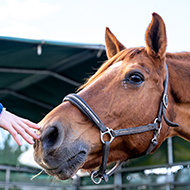
Image © Andrew Brown-Pearn/Shutterstock


Become a member
or log in to add this story to your CPD history