Welcome to vnonline.co.uk

vnonline.co.uk provides the veterinary nursing profession with the latest news and industry developments, as well as events, resources, learning materials and careers.

Our website is dedicated to veterinary nurses and we strive to provide a platform where you can voice and explore your interests.

Not a member yet? Sign up for free!

Register for free with vnonline.co.uk to gain unlimited access to news, resources, jobs and much more!




Click here to become a member


Log in to vnonline

Forgot your password?

Posted: 10th April 2026

Study to develop ‘intelligent’ HCM stethoscope
HCM affects one in seven cats in the general population.
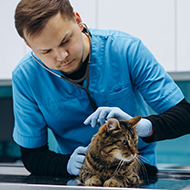
The AI-assisted technology will aid diagnosis of cats.

Researchers have received funding to create an ‘intelligent stethoscope’ to aid the diagnosis of hypertrophic cardiomyopathy (HCM) in cats.

José Novo Matos received funding from BSAVA PetSavers and the Veterinary Cardiovascular Society to develop the AI-assisted technology for GP veterinary professionals.

HCM is the most common heart disease in cats, and affects one in seven cats in the general population. Most cats remain asymptomatic, however up to 30 per cent will develop congestive heart failure, aortic thromboembolism or sudden cardiac death.

The condition is usually diagnosed using echocardiography, which requires specialist expertise and equipment.

Researchers say that, since there are few veterinary cardiologists to screen affected cats, many cats remain undiagnosed and at risk. They hope to create a simple, accessible diagnostic tool that will improve early detection and care.

The new project will see veterinary cardiologists collaborate with engineers that specialise in acoustics and biomedical technology.

It will build upon researchers’ previous work on AI, which was used to grade heart murmurs in dogs and assist the staging of myxomatous valve disease. An algorithm will be trained, using recordings from an electronic stethoscope, to detect and characterise heart murmurs in cats.

The researchers hope that the creation of this tool will enable general practitioners to identify cats at risk of HCM during their routine clinical examinations. It would also help GPs to identify which cats should be referred for echocardiography.

The project will see a collaboration between the University of Cambridge’s Department of Veterinary Medicine, the Royal Veterinary College, Davies Veterinary Specialists, Willows Veterinary Centre and the University of Cambridge Department of Engineering.

José Novo Matos said: “I have a particular interest in cardiomyopathies, which represent a heterogeneous group of diseases influenced by a complex interplay of genetic, environmental, and epigenetic factors.

“This multifactorial nature poses significant challenges for early diagnosis and for predicting disease progression. Importantly, feline cardiomyopathies closely mirror their human counterparts in terms of pathophysiology, clinical presentation, and genetic background, providing a robust One Health model for translational research.”

Image © PH888/Shutterstock


Become a member
or log in to add this story to your CPD history