Operation saves monkey’s foot from amputation.
A critically-endangered monkey has given birth after a unique operation saved her foot from amputation.
Masaya, a 15-year-old roloway monkey at Chester Zoo, underwent pioneering surgery to remove a mass from her foot last summer.
The operation was performed jointly by veterinary surgeons from Chester Zoo, as well as surgeons from the University of Liverpool. Rather than amputating Masaya’s foot, the team hoped to instead only remove the golf-ball-sized mass from her foot.
Masaya had been experiencing recurring problems with her foot since she arrived at Chester Zoo in 2023. She was given x-rays, ultrasounds and biopsies, however veterinary surgeons were unable to ascertain the cause.
After swelling became worse Masaya underwent a CT scan at the University of Liverpool, where it was decided that surgery would be needed to remove the abscess.
Masaya’s pregnancy made the surgery particularly necessary, since an amputated foot could have made it impossible for her to hold her offspring. There is no evidence of any similar procedures being performed on a roloway monkey, but thankfully, the surgical team were able to save all but one of her toes.
Rachel Burrow, a vet and lecturer at the University of Liverpool: “This was the last chance to save Masaya's foot before amputation. Working with primates is completely different from my usual patients, who are typically cats and dogs, and it was a real privilege to care for such a rare animal.
“It's great to see the surgery was a success - she's comfortable, active and using the limb well."
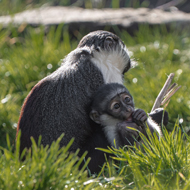
In a significant moment for the species, Masaya has now given birth to her third daughter – Lagertha.
Zoe Edwards, a primate keeper at Chester Zoo, said: “Masaya is a very experienced mum and she's parenting magnificently. Lagertha is only a few weeks old and is very dinky, but already curious about the roloway monkey habitat and inquisitive about us.
“The fact Masaya’s foot has healed so well is a huge relief. If she'd had an amputation, we'd have been left with real questions about whether she could hold her offspring or continue with her normal behaviours.”
Image © Chester Zoo





 The latest