Welcome to vnonline.co.uk

vnonline.co.uk provides the veterinary nursing profession with the latest news and industry developments, as well as events, resources, learning materials and careers.

Our website is dedicated to veterinary nurses and we strive to provide a platform where you can voice and explore your interests.

Not a member yet? Sign up for free!

Register for free with vnonline.co.uk to gain unlimited access to news, resources, jobs and much more!




Click here to become a member


Log in to vnonline

Forgot your password?

Posted: 9th March 2026

BEVA updates guidelines for equine euthanasia
BEVA says equine welfare comes first, regardless of the horse's insurance status.
Decisions will be organised into three defined categories.

The British Equine Veterinary Association (BEVA) has updated its guidelines for the euthanasia of insured horses.

The guidelines, which were last updated in 2009, are intended to reflect advances in veterinary science and present clearer clinical protocols to users.

Its most significant update to the guidance is the introduction three defined categories. Veterinary surgeons will assess whether they have definite grounds, suspected grounds, or no grounds for euthanasia.

Ian Beamish, who led BEVA’s working group, says that this approach will remove ambiguity and provide veterinary surgeons with a usable and evidence-based process to base decisions.

Speaking on BEVA’s podcast, BEVApod Focus, Mr Beamish said: “We’ve really tried to make it… at least a fairly uniform grey section that we can get people to work through so they can come to their conclusion.”

The new guidance also highlights the horse’s welfare as the primary concern of practising veterinary surgeons. Mr Beamish says that, regardless of insurance status, the primary responsibility should always be the welfare of the horse.

Mr Beamish said: “At its heart, this is a welfare document first and foremost… The fact that that is an insured or not insured animal shouldn’t affect how you make that decision.”
 
However, while insurance does not influence clinical decisions, the guidance recognises its significance when recording cases. How the decision is documented and evidenced is likely to be scrutinised, and so consideration is required at this stage.

The guidance recommends that veterinary surgeons make use of smartphones to contact someone for a second opinion or to document the case before them.

Chronic conditions, which were a key concern ahead of the review, are also addressed in the guidance. Mr Beamish says many of BEVA’s members had expressed uncertainty with cases that did not neatly fit emergency criteria.

Mr Beamish said: “A laminitic case is a classic example… clearly suffering, uncomfortable, but doesn’t necessarily meet the grounds for emergency euthanasia… There are some common themes such as persistent raised pulses, persistent discomfort and pain, and weight loss.”

Concluding the podcast, Mr Beamish said: “Welfare is the most critical part of all of this… If there’s any question or if you have any doubts, get a second opinion… That reassurance helps me sleep at night.”

The update guidance can be accessed on the BEVA website.

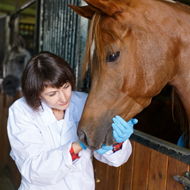
Image © Jaromir Chalabala/Shutterstock.com


Become a member
or log in to add this story to your CPD history