Welcome to vnonline.co.uk

vnonline.co.uk provides the veterinary nursing profession with the latest news and industry developments, as well as events, resources, learning materials and careers.

Our website is dedicated to veterinary nurses and we strive to provide a platform where you can voice and explore your interests.

Not a member yet? Sign up for free!

Register for free with vnonline.co.uk to gain unlimited access to news, resources, jobs and much more!




Click here to become a member


Log in to vnonline

Forgot your password?

Posted: 19th February 2026

Drawer handles cause feline leg injuries, study finds
Horizontal drawer handles are liked with rare, but serious, joint injuries.
Handles resulted in traumatic injuries to a joint in the ankle.

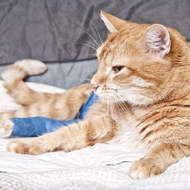
New research has highlighted drawer handles as a potential household injury risk for cats in most homes.

Horizontal drawer handles have been linked with a rare, but serious, injury to the joint between cats’ ankle and foot on their hind leg.

The injury can occur when cats jump down from a worktop or cupboard. Pets may catch their hind paw in the handle, causing potentially traumatic injury.

The Royal (Dick) School of Veterinary Studies reports that four of its five recent cases of this injury were caused by drawer handles.  

The age range of the cats varied from just under two years to over 15 years old. Three of the cats were unable to put weight on the affected leg, while others showed noticeable signs of lameness.

None of the cats responded to conservative management.

All five cats underwent a surgical procedure to permanently stabilise the damaged joint. This saw surgeons fuse part of the joint, using a metal plate and screws.

Researchers have noted that, while this surgery is well-established in dogs, it is rarely used in cats.

The cats all recovered well from the procedure and were able to bear weight on the operated leg within a day. They were each discharged from the hospital within two days, displaying no signs of major complication.

Based on these cases, the researchers conclude that surgical intervention was effective for this type of injury. Cats were able to return to their pre-injury lifestyles.

Researchers also say that this type of injury is under-recognised among the veterinary profession, requiring greater awareness.

Rachel Nixon, a resident in small animal surgery, said: “Cats often jump down vertically from worktops or cupboards, placing their hind legs close to drawers as they descend. If a paw slips into a handle, the cat’s body weight and momentum may cause the joint to twist or dislocate.

“Owners should look out for sudden lameness, refusal to bear weight on a leg, or obvious pain after a fall or jump. Early diagnosis and appropriate treatment help achieve a successful outcome.”

The full study can be found in the Journal of Small Animal Practice.

Image © Shutterstock.com/Daniel Rajszczak


Become a member
or log in to add this story to your CPD history