Welcome to vnonline.co.uk

vnonline.co.uk provides the veterinary nursing profession with the latest news and industry developments, as well as events, resources, learning materials and careers.

Our website is dedicated to veterinary nurses and we strive to provide a platform where you can voice and explore your interests.

Not a member yet? Sign up for free!

Register for free with vnonline.co.uk to gain unlimited access to news, resources, jobs and much more!




Click here to become a member


Log in to vnonline

Forgot your password?

Posted: 28th January 2026

RVC shares new feeding tube guidelines
Incorrect placement can cause aspiration pneumonia and pneumothorax.
It is the first time standardised guidelines have been shared for vets.

The Royal Veterinary College (RVC) has published new guidelines to support veterinary professionals with feeding tube placement in dogs and cats.

The standardised guidelines, which are based on research, detail how first opinion and referral practitioners can use radiographs to safely check feeding tube position.

Tube feeding is routinely used in veterinary medicine to support patients and reduce mortality. However, incorrect placement of a feeding tube can have severe and potentially fatal consequences, such as aspiration pneumonia and pneumothorax.

To reduce the risk of such occurrences, the RVC sought to create a standardised guide for assessing feeding tube placement.

Researchers gathered 256 lateral neck and chest radiographs depicting dogs or cats with either type of feeding tube fitted. These were sourced from ten private and academic institutions.

Expert veterinary radiologists were then asked to verify whether if the tubes were correctly placed in the oesophagus or incorrectly in the trachea.

These responses were used to inform radiographic guidelines that would determine the correct placement of feeding tubes – communicated as a three-point system to summarise the process.

Six veterinary surgeons, of varying clinical experience, were then recruited to assess the effectiveness of the guidelines.

The veterinary surgeons first reviewed the same set of radiographs, relying on their prior judgement to assess the images.

At least seven days later, after being shown the new radiographic guidelines, the same group was shown the selection of radiographs again. These two sets of results were compared to ascertain how far the guidelines had improved accuracy and confidence in interpreting tube placement.

There was a significant improvement in diagnostic accuracy after the guidelines had been produced. Correct identification of feeding tube placement increased from 82 per cent to 96 per cent.

There was also a reduction in uncertainty, which fell from 14 per cent to just two per cent.

The guidelines proved effective in setting standards between clinicians, improving agreement from moderate to almost perfect. This was consistent across dogs and cats, a wide range of patient sizes, and multiple clinical settings.

Researchers say that this proves that a structured, evidence-based approach to radiographic guidelines can improve the safety and reliability of feeding tube placement in dogs and cats, The guidelines have been produced as an easy-to-use graphic to make them well-suited to both general practice and critical care settings.

Andrea Vila Cabaleiro, small animal diagnostic imaging resident at the RVC and lead author of the paper, said: “I am incredibly excited about the publication of this paper, which helps veterinarians prevent life-threatening consequences associated with feeding tube misplacement.

“I am proud to share these guidelines, which support safer, more confident decision-making in everyday practice.”

The full study can be found in the journal Veterinary Radiology and Ultrasound.

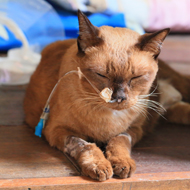
Image © SUJITRA CHAOWDEE/Shutterstock.com


Become a member
or log in to add this story to your CPD history