Welcome to vnonline.co.uk

vnonline.co.uk provides the veterinary nursing profession with the latest news and industry developments, as well as events, resources, learning materials and careers.

Our website is dedicated to veterinary nurses and we strive to provide a platform where you can voice and explore your interests.

Not a member yet? Sign up for free!

Register for free with vnonline.co.uk to gain unlimited access to news, resources, jobs and much more!




Click here to become a member


Log in to vnonline

Forgot your password?

Posted: 21st January 2026

Horse owners keen on EHV vaccines, survey finds
While most supported vaccinations, many did not vaccinate their horse against EHV.
Ninety-three per cent not vaccinating would if a vet advised.

A recent survey has revealed that 93 per cent of horse owners would vaccinate against Equine Herpes Virus (EHV) if advised by a veterinary surgeon.

While 86 per cent believed that vaccination significantly reduced the spread of EHV, only 17 per cent said they vaccinated their horse against it.

The study, shared by Zoetis UK, surveyed 2256 horse owners. Approximately two thirds of respondents owned more than one horse, and most horses were used for leisure or competition.

Through the survey, researcher aimed to record the current rate of EHV vaccination, how well horse owners understood EHV and the barriers to vaccination.

Although respondents were largely not compliant with EHV vaccinations, their support for vaccination meant they were up to date with flu and tetanus vaccinations. The survey showed that 95 per cent of respondents kept their horse vaccinated.

However, despite most horse owners supporting of vaccination, there was a lack of understanding on how EHV was transmitted and its risk to horses. More than 25 per cent said that they did not exactly understand the virus.

This was particularly of note as 98 per cent of respondents acknowledged that equine gatherings posed a risk for EHV spread. Seventy-five per cent also reported that they frequently left their home premises with the horses.

Regarding disease transmission, 94 per cent knew that EHV spread by nose-to-nose touching from horses. However, one in four did not know it could also be transmitted via air droplets, shared equipment, handlers or bedding.

This information was beneficial, with 78 per cent of those not currently vaccinating said this new understanding would prompt them to vaccinate their horse.

Wendy Talbot, national equine veterinary manager, said: “The results confirm that the veterinary profession remains a highly regarded source of advice and recommendation in order to help reduce the potentially fatal risks of EHV outbreaks,

“Education and awareness are key to helping horse owners understand the seriousness of the disease threat and how vaccination helps to reduce the spread.”

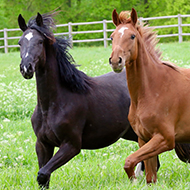
Image © c_brcknr/Shutterstock


Become a member
or log in to add this story to your CPD history