Welcome to vnonline.co.uk

vnonline.co.uk provides the veterinary nursing profession with the latest news and industry developments, as well as events, resources, learning materials and careers.

Our website is dedicated to veterinary nurses and we strive to provide a platform where you can voice and explore your interests.

Not a member yet? Sign up for free!

Register for free with vnonline.co.uk to gain unlimited access to news, resources, jobs and much more!




Click here to become a member


Log in to vnonline

Forgot your password?

Posted: 14th January 2026

Carbon footprint of dog food revealed by study
Pet owners are advised to research the meat cuts in their dog's food.
Wet, raw, and meat-rich products had the highest greenhouse gas emissions.

A study has revealed that some dog foods produce a larger carbon footprint than human foods.

It has been estimated that the production of dog food ingredients in the UK contributes to approximately one per cent of the country’s total greenhouse gas emissions.

Researchers from the University of Edinburgh and the University of Exeter examined the ingredient and nutrient labelling information of almost 1000 commercially available dog foods. This was used to calculate their carbon footprints, based on the emissions which were generated during the production of ingredients.

The test sample included a selection of dry, wet, and raw foods, as well as plant-based and grain-free options.

It is estimated that producing these foods for dogs worldwide would produce greenhouse gas emissions equivalent to half of those emitted from commercial flights each year.

There was a notable difference between the environmental impact of different commercial dog foods. The highest impact products were responsible for up to 65 times more emissions than the lowest rating options. 

Products which used large amounts of prime meat were found to be increasing the industry’s emissions. Meanwhile those using nutritious carcass parts, which are in low demand, helped to limit environmental impact.

Dry food, which was not marketed as grain-free, also had a lower impact than wet, raw or grain-free options.

Researchers recommend that dog owners that want to reduce their environmental impact should consult the label description of the meat cuts used in the food. Products which have a lower content of prime cut meats will also have a lower carbon footprint.

John Harvey, from the Royal (Dick) School of Veterinary Studies, said: “As a veterinary surgeon working on environmental sustainability, I regularly see owners torn between ideals of dogs as meat‑eating ‘wolves’ and their wish to reduce environmental harm.

“Our research shows just how large and variable the climate impact of dog food really is. It’s important for owners to know that choosing grain-free, wet or raw foods can result in higher impacts compared to standard dry kibble foods.

“The pet food industry should make sure meat cuts used are of the types not typically eaten by humans, and that labelling is clear.”

The full study can be found in the Journal of Cleaner Production.

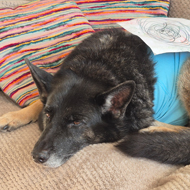
Image © Switlana S/Shutterstock.com


Become a member
or log in to add this story to your CPD history