Welcome to vnonline.co.uk

vnonline.co.uk provides the veterinary nursing profession with the latest news and industry developments, as well as events, resources, learning materials and careers.

Our website is dedicated to veterinary nurses and we strive to provide a platform where you can voice and explore your interests.

Not a member yet? Sign up for free!

Register for free with vnonline.co.uk to gain unlimited access to news, resources, jobs and much more!




Click here to become a member


Log in to vnonline

Forgot your password?

Posted: 23rd October 2017

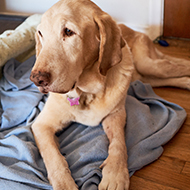
‘Dogs alter faces when humans are looking’ - study
While dogs made far more facial expressions when humans were watching, being offered food did not produce the same effect.
Research suggests dogs use facial expressions to communicate 

Dogs produce more facial expressions when humans are looking, according to new research.

Scientists from the University of Portsmouth’s Dog Cognition Centre, say they have found the first clear evidence that dogs alter their faces in response to human attention.

Most mammals use facial expressions but it has long been assumed that this is involuntary in animals - dependent on the individual’s emotional state, and not used in response to an audience.

Lead author Dr Juliane Kaminski said it is possible that dogs’ facial expressions have changed as a result of domestication.

Researchers observed 24 family dogs of various breeds, aged one to 12. They were kept on a lead about a metre away from a person, who displayed a range of behaviours, such as facing the dog, being distracted, and facing away from the dog.

The dogs’ facial expressions were monitored using DogFACS, an anatomically-based coding system that captures movements from the canine face muscles. Brow raising, which makes the eyes look bigger (otherwise known as ‘puppy dog eyes’), was the most commonly used expression in the study.

Researchers found that while dogs made far more facial expressions when humans were watching, being offered food did not produce the same effect, suggesting dogs use facial expressions to communicate, not just because they are excited. This is the first time scientists have systematically examined dog facial expressions that are used to communicate with humans.

The team say it is not yet possible to determine if dogs actually have an understanding of human perspective, or whether this is a hardwired or learned response.


Become a member
or log in to add this story to your CPD history