Welcome to vnonline.co.uk

vnonline.co.uk provides the veterinary nursing profession with the latest news and industry developments, as well as events, resources, learning materials and careers.

Our website is dedicated to veterinary nurses and we strive to provide a platform where you can voice and explore your interests.

Not a member yet? Sign up for free!

Register for free with vnonline.co.uk to gain unlimited access to news, resources, jobs and much more!



Click here to become a member


Log in to vnonline

Forgot your password?

Posted: 8th March 2016

‘Ghostlike’ octopus discovered near Hawaii
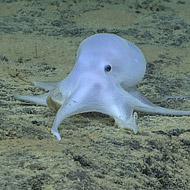
Casper
Casper, the 'remarkable little octopod’, was discovered around 2.5 miles off the coast of Necker Island.
Unlike any published records

A ‘ghostlike’ species of octopus has been discovered by scientists while exploring the Pacific Ocean floor near Hawaii.

On February 27, a team came across ‘a remarkable little octopod’, around 2.5 miles off the coast of Necker Island.

The appearance of the octopus was unlike any published records and was the deepest observation ever (4,000 meters) for this type of cephalopod.

Michael Vecchione from the National Oceanic and Atmospheric Administration said that the octopus falls into the incirrate octopod group, in that it did not have fins and all of its suckers were in one row on each arm.

“This animal was particularly unusual because it lacked the pigment cells, called chromatophores, typical of most cephalopods, and it did not seem very muscular,” he said.

“This resulted in a ghostlike appearance, leading to a comment on social media that it should be called Casper, like the friendly cartoon ghost.

“It is almost certainly an undescribed species and may not belong to any described genus.”

After seeing the octopus, Michael contacted his colleagues who agreed that the discovery is unusual and is a depth record for incite octopods.

They are now looking to combine this observation with some other deep incirrate observations by a German cruise in the eastern pacific into a manuscript for publication. 


Become a member
or log in to add this story to your CPD history